Cartel Tycoon: Environment Concepts
Cartel Tycoon is a new business sim set in fictionalized '80s Latin America. You'll need to build an empire of illegal goods and smuggling chains in order to survive: carteltycoon.com 👈
Buildings are a crucial component of the game, so it was essential that they were easily identifiable and reflected the game's essence and established style. All the elements needed to be distinguishable from a bird's eye view while avoiding the conventional tabletop gaming style.💡To accomplish this, we focused on the scale and detail level of map objects.
Moreover, it was important to give each building its own identity while making sure that multiple buildings of the same type in a row looked realistic, rather than appearing to be copied and pasted. Additionally, we had to create buildings that matched the era and environment of '90s Latin America.

The warehouse is the most vital part of our logistics chain. It's meant to be a benchmark building: not too expensive or cheap, and one we frequently encounter.
By designing it first, we could add or remove complexity from the buildings that came after it

The farm had to show what was growing there without clicking on it.
As all the buildings are relatively small when a player is zoomed out, we had to devote most of the building’s space to the crop-growing area and make the plants disproportionately large


The Spanish Colonial style has characteristic design elements that served as the foundation for this church. Bright elements, contrasting colors, the use of natural materials, high doorways, wooden beams, and tile roofs
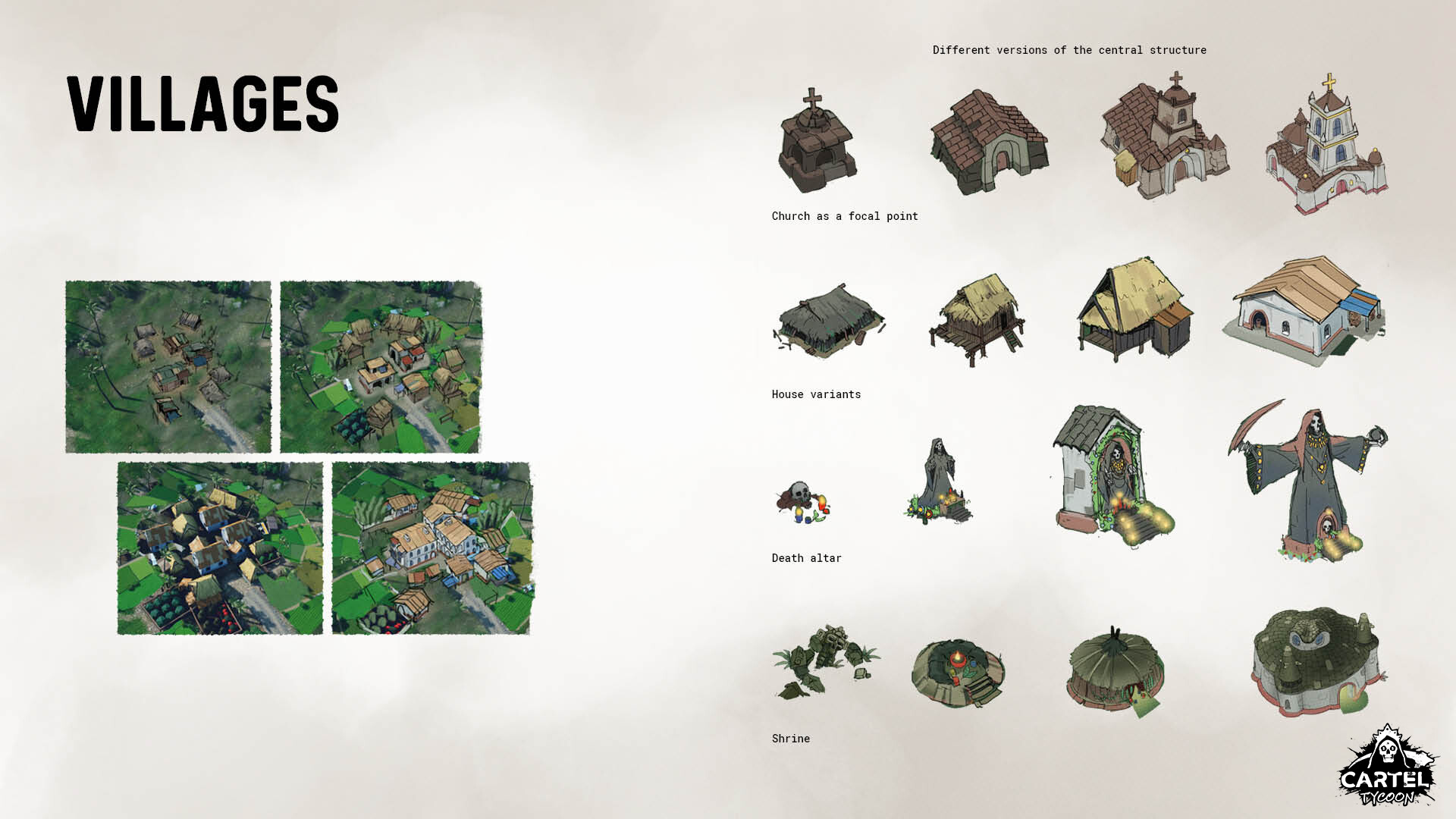


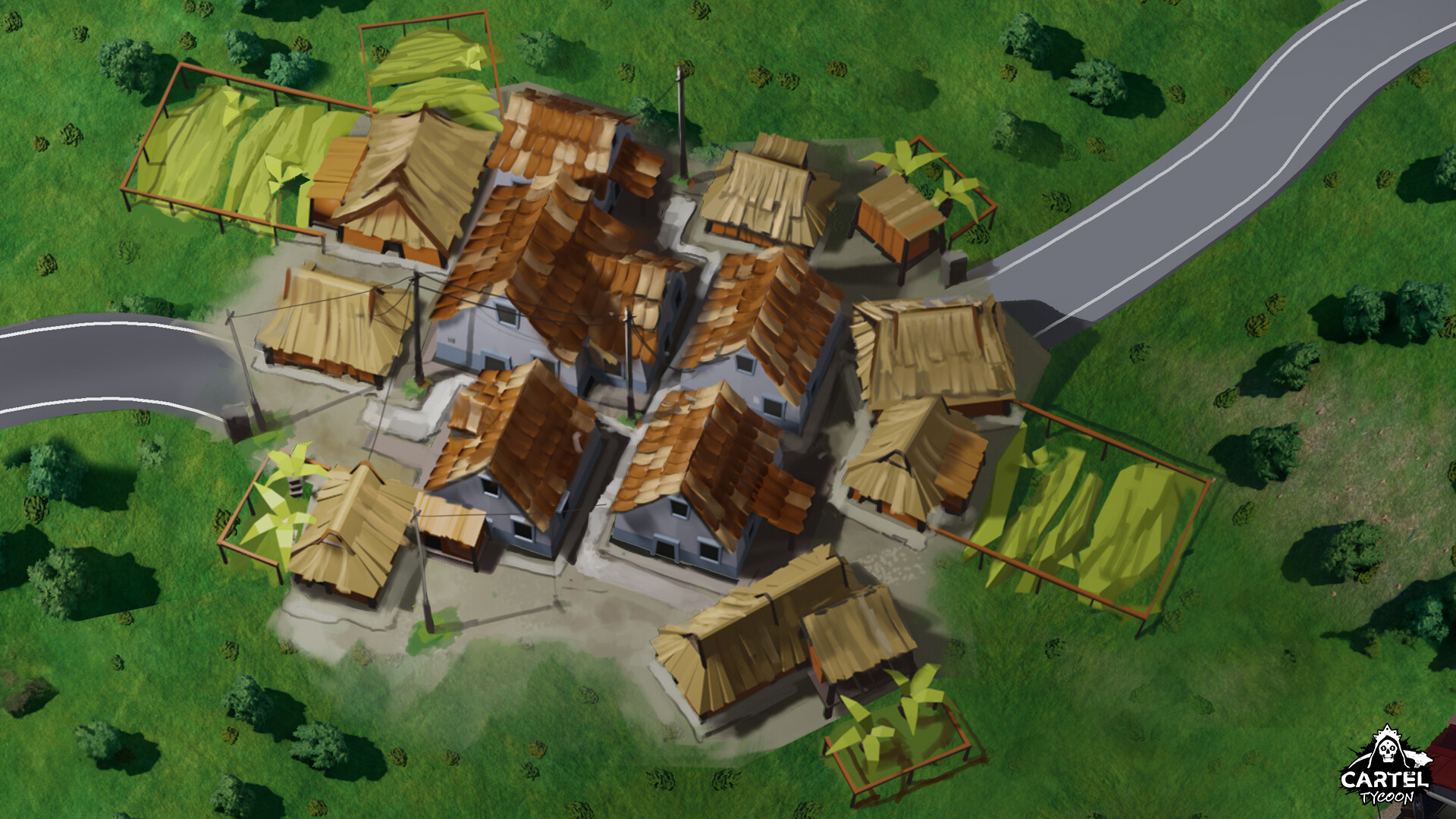
Although villages are not a central game mechanic, they play a vital role in adding diversity to the game and making the game map feel more alive. Just like every other aspect of the game, villages had to be designed to reflect the region and era
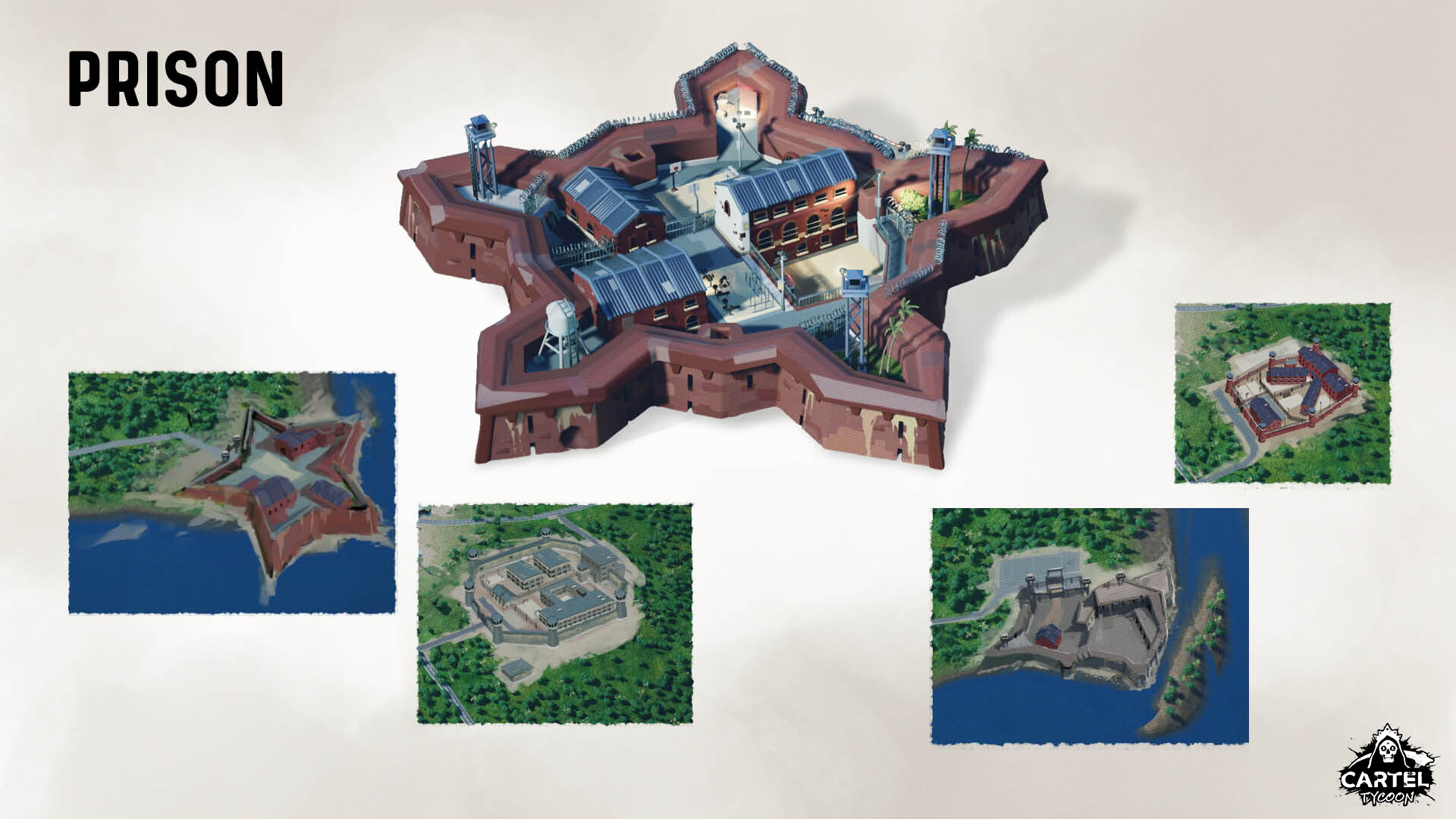
Making the prison a repurposed fort instead of just a standard prison out in a field was indeed a genius decision!

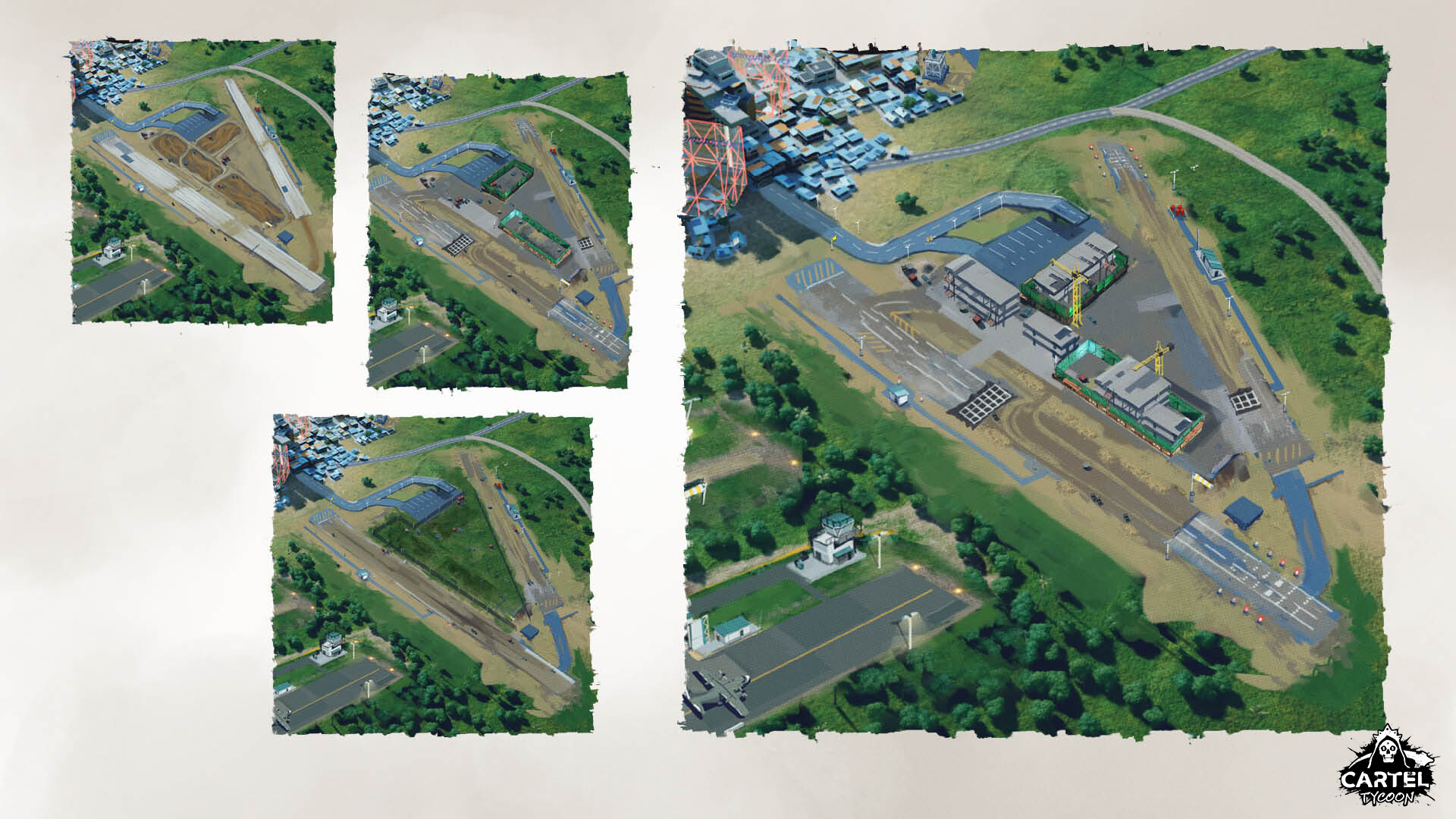
The airport was challenging to place in the environment. We tried many fields and landing strip variations before it finally started to look like it fit on the map

Although the tents were camouflaged to blend in with the surroundings, they were intended to be easily noticeable on the map for the player. In the end, the decision was made to use brightly-colored "camouflaged" tents for the final version
